
The Entitlement Layer: Managing Licenses
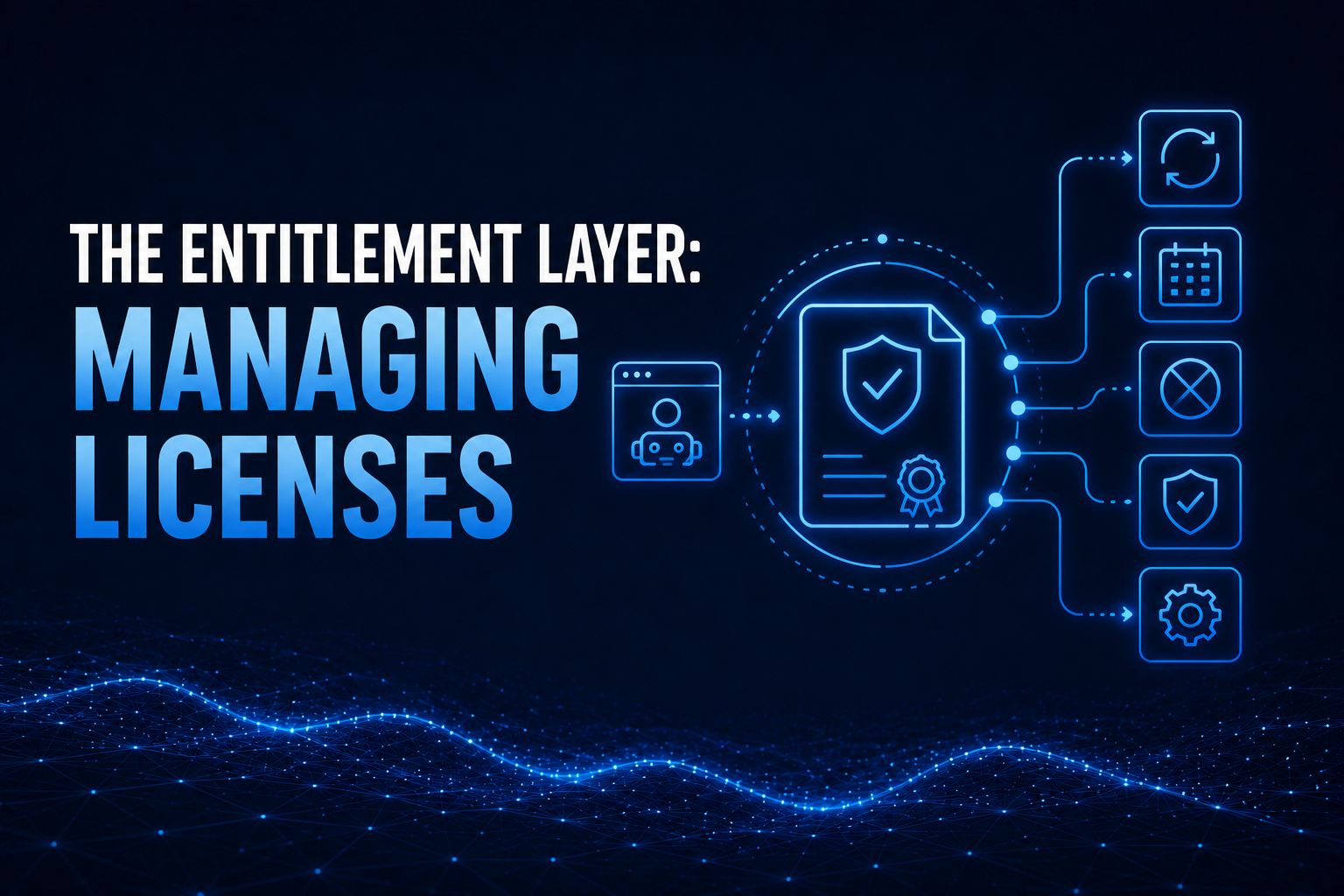
A license is an agreement. On its own, it is a statement of terms sitting in a document or a policy. What turns that agreement into something a system can act on, repeatedly and over time, is a record of who currently holds which rights and within what limits. That record is the entitlement, and managing it is the job of the entitlement layer.
The distinction is easy to miss but important. The policy layer declares what uses are possible and at what price. The entitlement layer tracks which specific parties have actually taken up those terms and what each is currently permitted to do. A policy might say that licensed retrieval is available at a given rate. An entitlement says that this particular agent holds a license for that retrieval, valid until a certain date, capped at a certain volume, and revocable if the terms are broken. One is the offer. The other is the standing agreement with a named party.
This layer matters because access in the AI economy is not a one-time event. An agent that licenses content does not consume it once and disappear. It returns, repeatedly, often at high frequency. Without a layer that remembers what that agent is entitled to, every request would have to be authorized from scratch, which does not scale. The entitlement layer is what makes an ongoing licensed relationship possible rather than an endless sequence of first encounters.
What the entitlement layer does
The entitlement layer is the part of the stack that records, resolves, and manages the standing rights held by each party.
Its core function is to answer a specific question at request time: does this party already hold a valid entitlement for what it is trying to do? When a licensed agent makes a request, the system does not re-derive its rights from first principles. It resolves the agent against its existing entitlements, confirms the request falls within them, and proceeds. This is what separates a licensed relationship from a fresh transaction. The rights were established once and are now simply looked up and applied.
An entitlement is more than a yes-or-no flag. It carries the shape of the license: which uses are permitted, what volume or rate is allowed, over what period, and under what conditions. Industry practice distinguishes the license, which defines the legal terms, from the entitlement, which is the assigned, enforceable instance of those terms for a specific recipient. The license says what may be done. The entitlement says who may do it, and tracks that assignment so the system can enforce it consistently every time that party returns.
Why entitlements are a lifecycle, not a switch
The reason entitlement needs its own layer is that rights change over time. An entitlement is not set once and left alone. It moves through a lifecycle, and the layer exists to manage every stage of that movement.
Entitlements are granted when a party takes up a license. They are modified when the relationship changes, through upgrades, downgrades, added scope, or adjusted limits. They are renewed when a term ends and both sides continue. And they are revoked when a license expires, a party stops paying, or terms are violated. Software entitlement systems are built precisely to grant, resolve, enforce, and revoke access rights across that full arc, because access that cannot be changed after it is granted is access an owner has lost control of.
This is a decisive shift away from the old model of static access. For years, software access was governed by something like a license key, a fixed credential that granted indefinite use and was hard to change after the fact. That model is giving way to dynamic entitlement, where access is a fluid set of permissions granted and revoked in real time based on a party's active, current status rather than a permanent unlock. The difference matters enormously for AI access, because machine relationships are fluid by nature. An agent's rights may need to expand mid-project, contract when a budget is exhausted, or end the moment a license lapses. A static grant cannot express any of that. A managed entitlement can.
Revocation deserves particular emphasis, because it is where the entitlement layer proves its value. The ability to revoke access quickly when a subscription is cancelled or terms are breached is what gives a license teeth over time. Without it, a licensed party that stops honoring the terms simply keeps its access, and the license becomes unenforceable the moment the relationship sours. The entitlement layer is what lets an owner withdraw rights as cleanly as it granted them.
Why entitlement is distinct from detection and enforcement
It would be easy to fold entitlement into the layers around it, but it does a job neither of them does. Detection establishes who a requester is. Enforcement decides whether a given request proceeds. Entitlement holds the standing context that makes both of those decisions meaningful over time.
Consider the sequence. The detection layer identifies the requester as a particular agent. That identity is necessary but not sufficient, because knowing who is asking does not tell you what they are allowed to do. The entitlement layer supplies that missing piece: it maps the identified party to the rights it currently holds. Only then can the enforcement layer act correctly, allowing a request that falls within the party's entitlements and refusing one that does not.
Without an entitlement layer between them, detection and enforcement have no memory. Each request would be evaluated in isolation, with no way to recognize that this agent established a license last week and is simply exercising it now. Enforcement would either have to re-authorize everything from scratch, which is slow and does not scale, or treat every requester identically regardless of what they have already licensed, which defeats the purpose of licensing at all. The entitlement layer is the persistent memory that lets a licensed relationship carry forward across requests, so that the system can tell an ongoing licensee apart from a first-time or unlicensed requester.
Why this layer matters more as agents multiply
The entitlement layer becomes more important, not less, as machine access scales, because scale is exactly what makes per-request authorization impossible.
A single agent making occasional requests could, in principle, be authorized each time. But agents do not behave that way. One agent can generate a high volume of requests in a short window, and an organization may run many agents at once, each potentially licensed to different resources under different terms. Managing that as a series of independent authorizations would collapse under its own weight. What makes it tractable is an entitlement layer that establishes each agent's rights once and then resolves requests against those standing rights at speed. Enterprise systems increasingly extend this logic directly to machine identities, assigning entitlements to agent IDs so that agents, like human users, hold managed rights rather than ad hoc permissions.
This connects the entitlement layer to the broader argument of this series. The whole premise of programmatic licensing is that licensing becomes executable in software rather than negotiated by hand. But executable licensing needs somewhere for the license to live once it exists. A programmatic license that could be issued but not tracked, scoped, renewed, or revoked would be a license the system forgets the instant it is granted. The entitlement layer is where an executed license persists as a managed, standing right, which is what allows programmatic licensing to describe a durable relationship rather than a single moment of permission.
It also relates to the shift away from subscriptions as the only durable model. A subscription is, in effect, one coarse kind of entitlement: a flat, ongoing grant. The reason subscriptions do not scale cleanly to agents is that a single flat grant cannot express the varied, changing rights that different agents need. A proper entitlement layer generalizes the idea, supporting not just a blanket subscription but scoped, metered, time-bound, and revocable rights of many shapes at once. It keeps what subscriptions get right, a persistent relationship, while shedding the rigidity that makes flat access a poor fit for machine consumption.
The layer that turns a license into a managed relationship
The entitlement layer is where a license stops being a static agreement and becomes a living record of what a specific party is currently permitted to do. It resolves each request against the rights that party already holds, so that a licensed agent can act within its terms without re-authorizing from scratch, and an owner can grant, scope, renew, and revoke those rights as the relationship evolves.
It is a distinct layer because it does what detection and enforcement cannot: it holds the standing context that connects an identity to its rights over time, and it manages the full lifecycle of those rights rather than treating access as a permanent switch. As agents multiply and machine relationships become continuous, that persistent, manageable record of who is entitled to what is what allows licensing to function as an ongoing arrangement rather than a permission granted once and never controlled again. A market that wants durable licensed access, and not just one-off transactions, needs a layer that remembers and manages what every party is entitled to.


